Best Architecture Walks in Sài Gòn: Four Ways to Read a Street
Affiliate disclosure: This page contains affiliate links. If you buy through them we may earn a small commission at no extra cost to you. As an Amazon Associate I earn from qualifying purchases. Read our full disclosure.
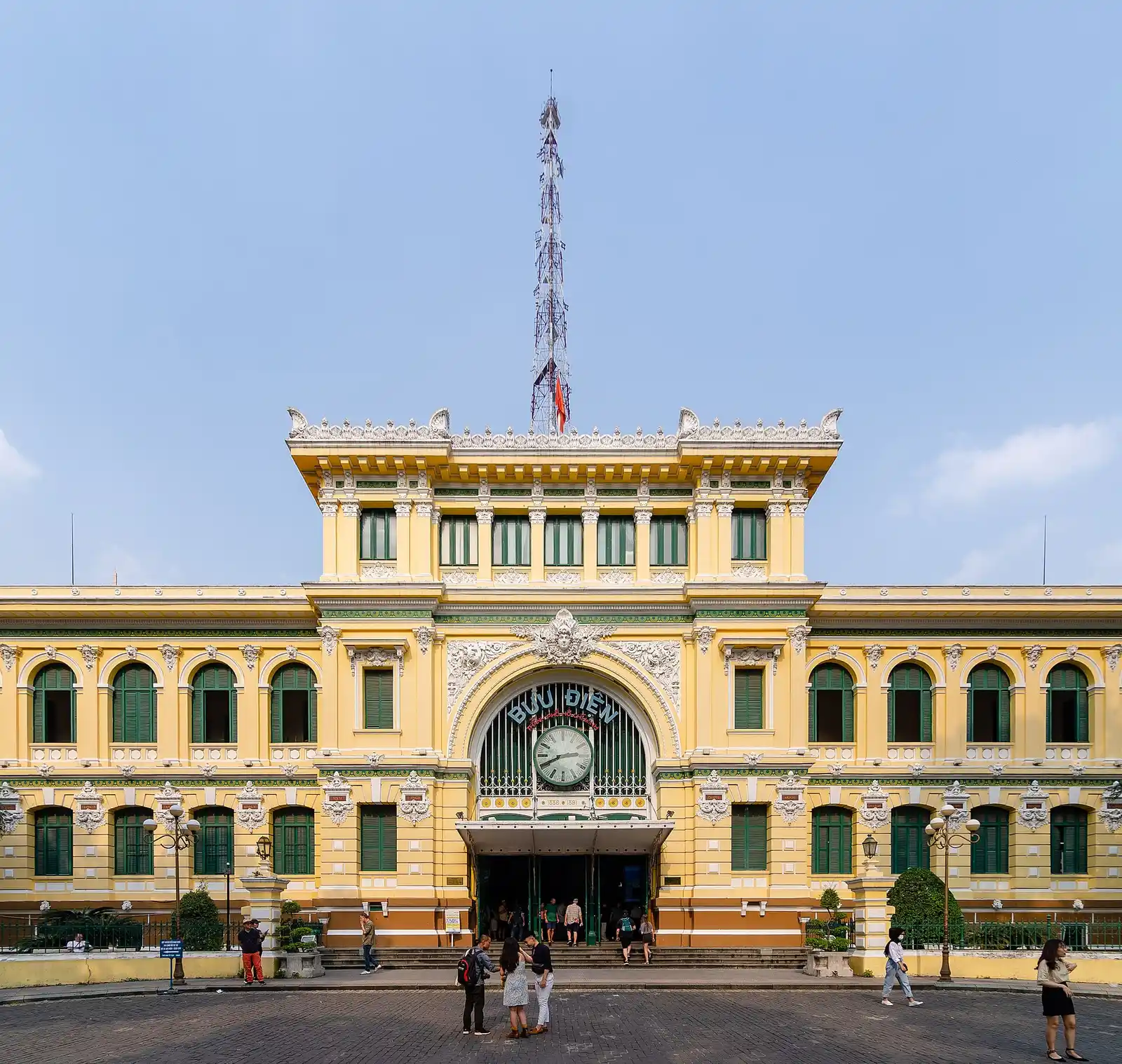
Picture the warm yellow of an old façade in late-afternoon light, the cool shade of a colonnade on your arms, and motorbike horns fading as you stop to look up.
This guide gives you four walking themes, so a short stroll turns into a way of reading the street.
What's on the list:
- Đồng Khởi: the best starting point for changing scale
- City museum: the best anchor for a building with a changing role
- Independence Palace: the best choice for a single-site study
- Chợ Lớn: the best theme for buildings in active use
How we picked:
- A researched shortlist built from the official and operator sources linked at the end; it is not a report of a personal visit.
- We do not list prices or opening hours, which change; check with the operator before you go.
- Facts checked against the linked sources on 20 October 2026.
Architecture becomes more interesting when you know what to look for. In central Sài Gòn, a short walk can reveal changes in scale, uses and street frontage without requiring a full-day sightseeing circuit. This guide offers four themes rather than one compulsory route. Each is grounded in places identified by the national or municipal tourism authorities, while the observation exercises are our own editorial suggestions. We have not surveyed pavements or verified current building access. Choose one theme, check its stops and leave room for an unplanned pause.
Đồng Khởi: the best starting point for changing scale
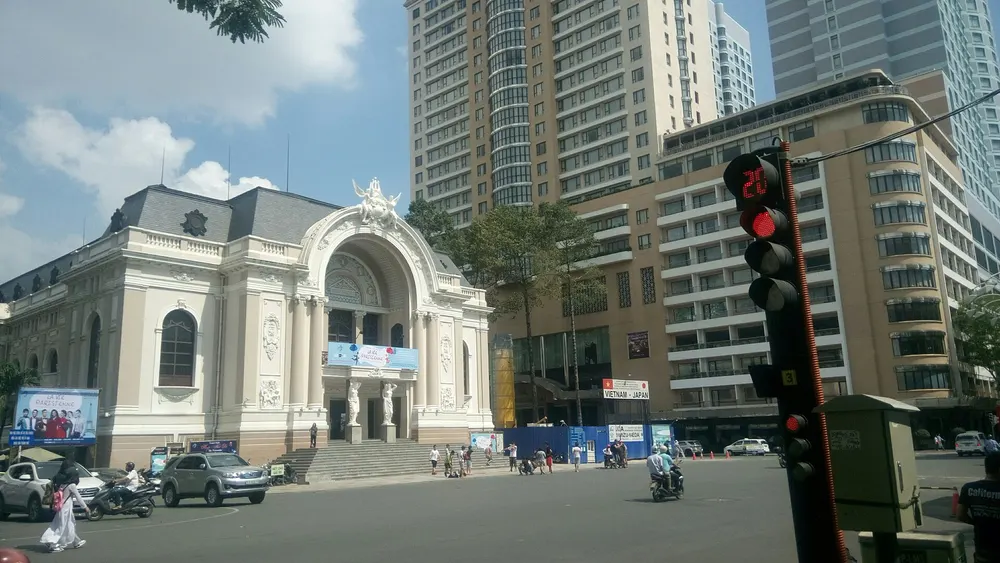
The national tourism overview links Đồng Khởi with the Opera House, Central Post Office and cathedral area. Use that central cluster to notice how a large landmark meets the everyday street. Compare the size of an entrance with the pavement in front of it and the height of neighbouring buildings. Start with exterior observation and add an interior only when it is clearly open for that purpose. The route is more rewarding if you stop at a few safe viewing points than if you attempt to photograph every facade while walking through traffic.
City museum: the best anchor for a building with a changing role
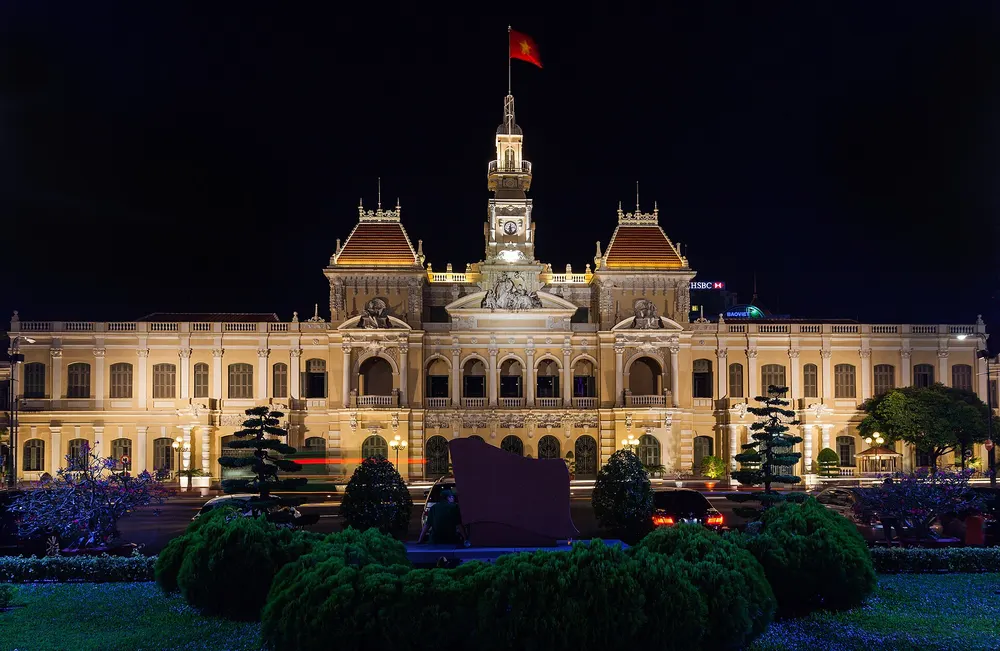
The Museum of Ho Chi Minh City gives an architectural walk a named historical anchor. Its institutional description explains that the building has served different functions, a useful reminder that architecture has a life beyond its original commission. Look at the relationship between formal exterior, corridors and display rooms. Ask how the present museum use fits the inherited structure. If you enjoy measured observation, sketch a simple entrance-to-room sequence. You do not need to establish a complete architectural history to understand that changing use leaves traces in a building.
Independence Palace: the best choice for a single-site study
The palace is a sensible alternative when you would rather concentrate on one major site than cross the city between facades. Its scale gives you material for thinking about arrival, ceremony and separation of functions. Check which visitor areas are included in the ticket and what is temporarily closed. For a useful exercise, follow the movement from an open area toward a more controlled interior and note what changes in light and proportion. This is an interpretation to test with your own observations, not a claim that every visitor will read the space identically.
Chợ Lớn: the best theme for buildings in active use
Chợ Lớn offers a different lens from the central landmark cluster. The national tourism authority highlights Bình Tây Market and Thiên Hậu Pagoda as places to explore in the Chinese quarter. A visit can focus on how commerce, gathering and worship occupy different kinds of space. These are working places, so give traders and worshippers priority. Ask before photographing people and follow posted rules. Resist reducing the neighbourhood to a decorative backdrop: a sign, threshold or courtyard matters because people use it, not only because it makes an attractive photograph.
Build a route you can actually enjoy
Choose two or three stops within one theme and save an arrival point for each. Keep street crossings deliberate and use a seated break to decide whether to continue. Map distance alone does not describe shade, traffic or pavement conditions. If your group needs a step-free route, confirm it directly rather than interpreting a general tourism description as an access assessment. Bring the Vietnamese names to help with navigation. Do not rely on old district labels alone; place names can remain familiar even when administrative addresses change.
A small field notebook makes the walk yours
Draw three boxes on a page before leaving: entrances, materials and uses. At each stop, add one observation to each box. This keeps the walk focused and gives companions a simple way to compare what they notice. When you return, label the photographs you kept with the actual building name and the question it raised. You can then read more from a reliable architectural or institutional source. The best walk is not necessarily the one with the most famous buildings; it is the one that leaves you noticing ordinary streets more clearly.
Compare tours and activities on Klook → (Check the current terms, inclusions and cancellation policy before booking.)
Sources and scope
- Vietnam Tourism: Ho Chi Minh City: National tourism authority; landmark, market and neighbourhood overview.
- Visit HCMC: Independence Palace: Municipal tourism authority; identity, location and operator link.
- Visit HCMC: Fine Arts Museum: Municipal tourism authority; art collections and building. Page contains inconsistent opening-history dates; dates not repeated.
- Visit HCMC: Museum of Ho Chi Minh City: Municipal tourism authority; site identity, exhibits and location.